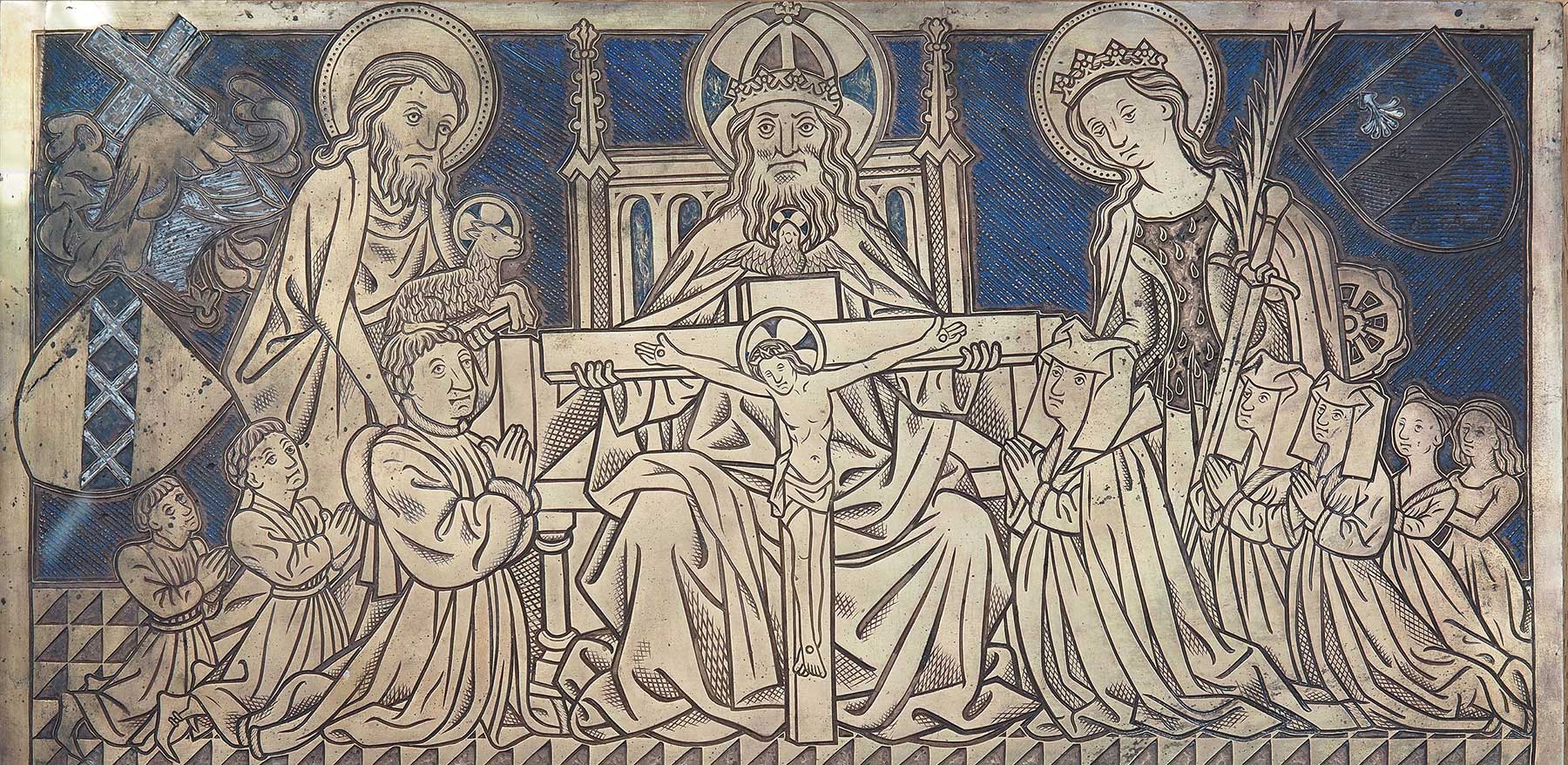
In the medieval and early modern periods in particular, monumental
brasses and incised slabs were popular forms of monuments or memorials
used to cover the tombs of those buried inside churches. An incised slab
is a flat memorial with an effigy of the deceased, a cross or other
appropriate subject, with epitaph, cut directly into the stone; they
originated before the Norman Conquest. A monumental brass, by contrast, is
engraved on sheets of metal inlaid in matrices cut into the stone; they
have been made in England from the thirteenth century to the present day.
Both brasses and slabs were designed in a range of styles reflecting
the general trends in art of their period. They can be studied from a
variety of perspectives, including the artistic context and iconography of
the monuments and the life, self-image and religious beliefs of those
commemorated.
Brasses and incised slabs are an interesting and absorbing study in
their own right, but they also provide rich visual imagery for those
interested in a range of other subjects.
Brasses and incised slabs act as a picture book illustrating key
figures in the British history. Many monuments show participants in key
events, including the 100 Years War with France, the Wars of the Roses and
the Civil War. There are brasses to medieval royalty, such as that at
Westminster Abbey to Eleanor de Bohun, daughter-in-law of Edward III and
aunt of Richard II. Others commemorate descendants of key figures in our
cultural heritage, such as the son and daughter-in-law of the poet,
Geoffrey Chaucer, at Ewelme, Oxfordshire.
The Victorian revival in brass production, led by such influential
ecclesiologists as Augustus Welby Pugin, led to the creation of monuments
of great richness, ornament and colour, which rank among the best products
of the art of the Gothic Revival.
Brasses and incised slabs also provide reliable contemporary sources
for the study of many other subjects, including genealogy, heraldry,
armour, costume and jewellery. They are also of interest to art
historians, church archaeologists and ecclesiologists.
Please explore our website by using the navigation button at the top
and side of the page to find out more about the MBS and these fascinating
memorials.